Obukhiv · living heritage
In every stitch — a story
What do the patterns of the Obukhiv “stitched” towel hide? Take a short journey and discover a tradition handed down from generation to generation.
The towel that is “stitched”
No one knows exactly when the distinctive ornament of Obukhiv embroidered towels took shape. Pieces dating from the 1860s have survived to this day in Kyiv museums.
A photograph from 1908 shows that the Obukhiv “stitched” towels were ritual objects. At weddings they were tied around the svashky, the bride’s attendants. Such towels decorated homes and were mostly hung in the pokut, the icon corner. Records show that in Obukhiv towels were embroidered not only by women but by men as well. They are called “stitched”, most likely because of the raised embroidery that covers the cloth so densely it looks sewn all over.
After the First World War, Obukhiv stopped making towels, and only at the turn of the 21st century did the craft revive. Embroiderers set about recreating the antique towels with great enthusiasm and gave the tradition new momentum.
- Centre
- Obukhiv, Kyiv region
- Technique
- Double-sided towel stitches
- Status
- Intangible cultural heritage of Ukraine
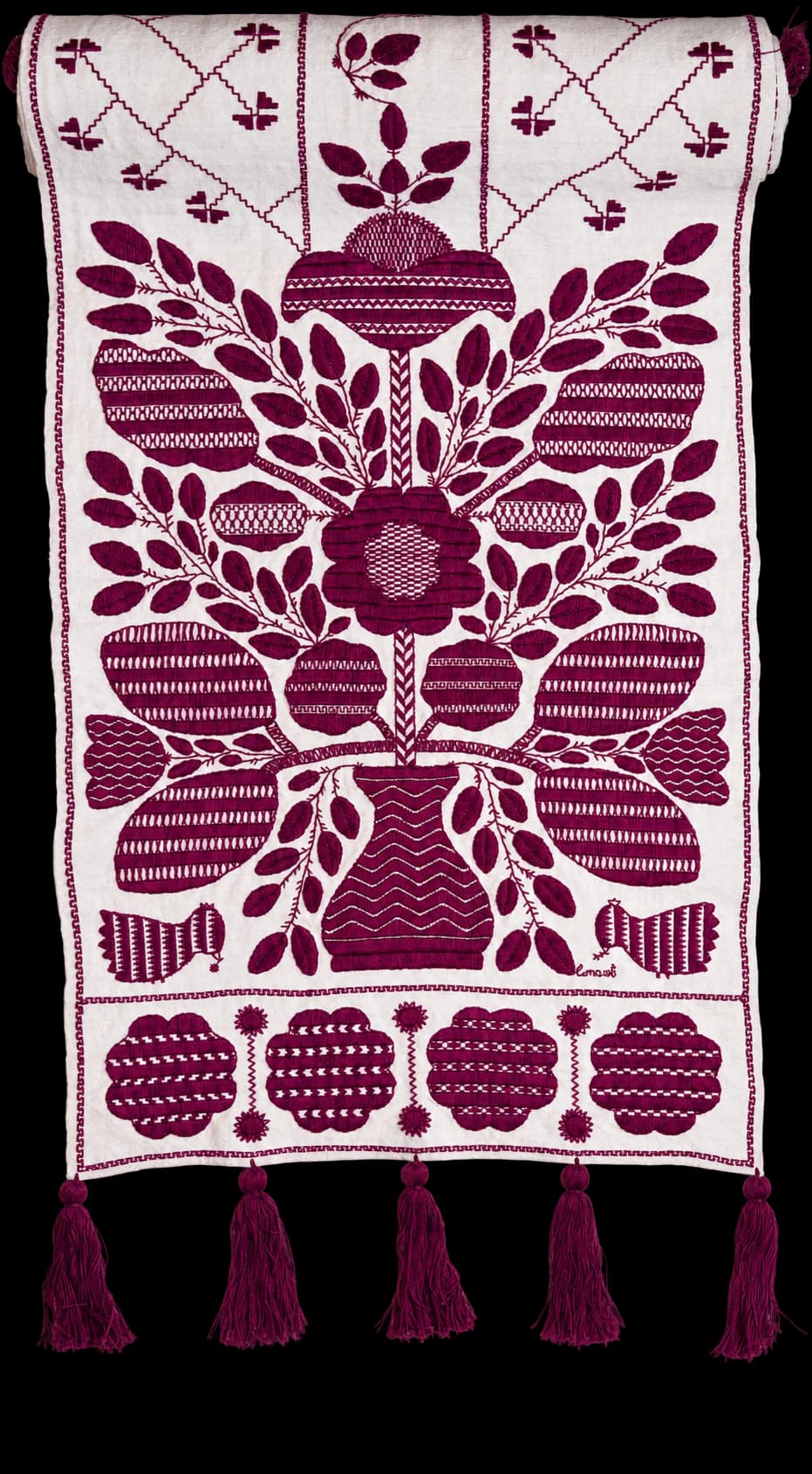
- Centre
- Obukhiv, Kyiv region
- Technique
- Double-sided towel stitches
- Status
- Intangible cultural heritage of Ukraine
Towel hall
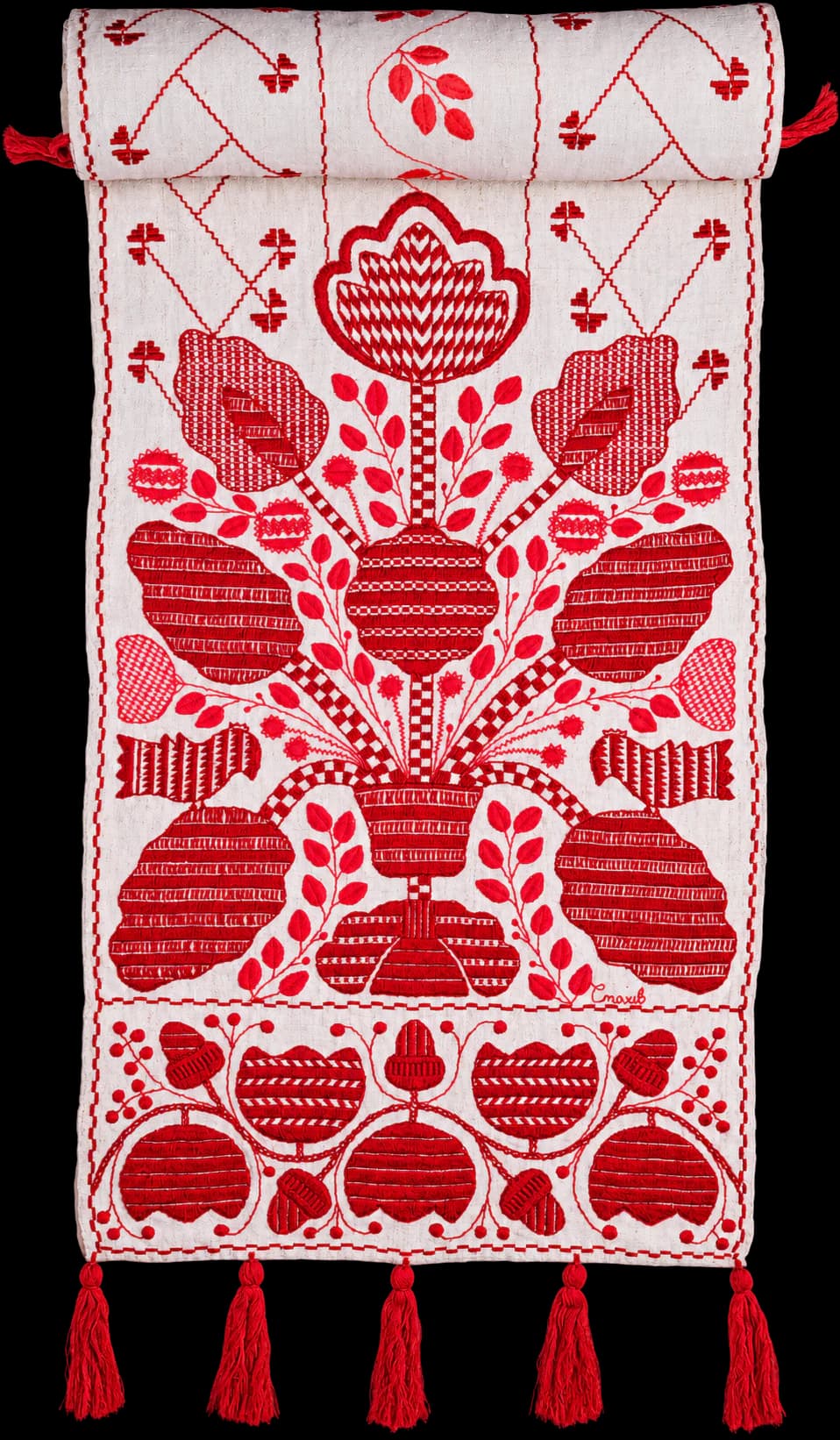
Antique Obukhiv towels
Tap an image to enlarge it
Ornament
The language spoken by thread
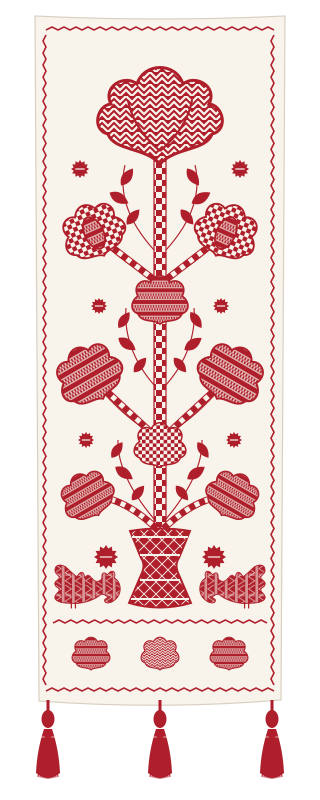
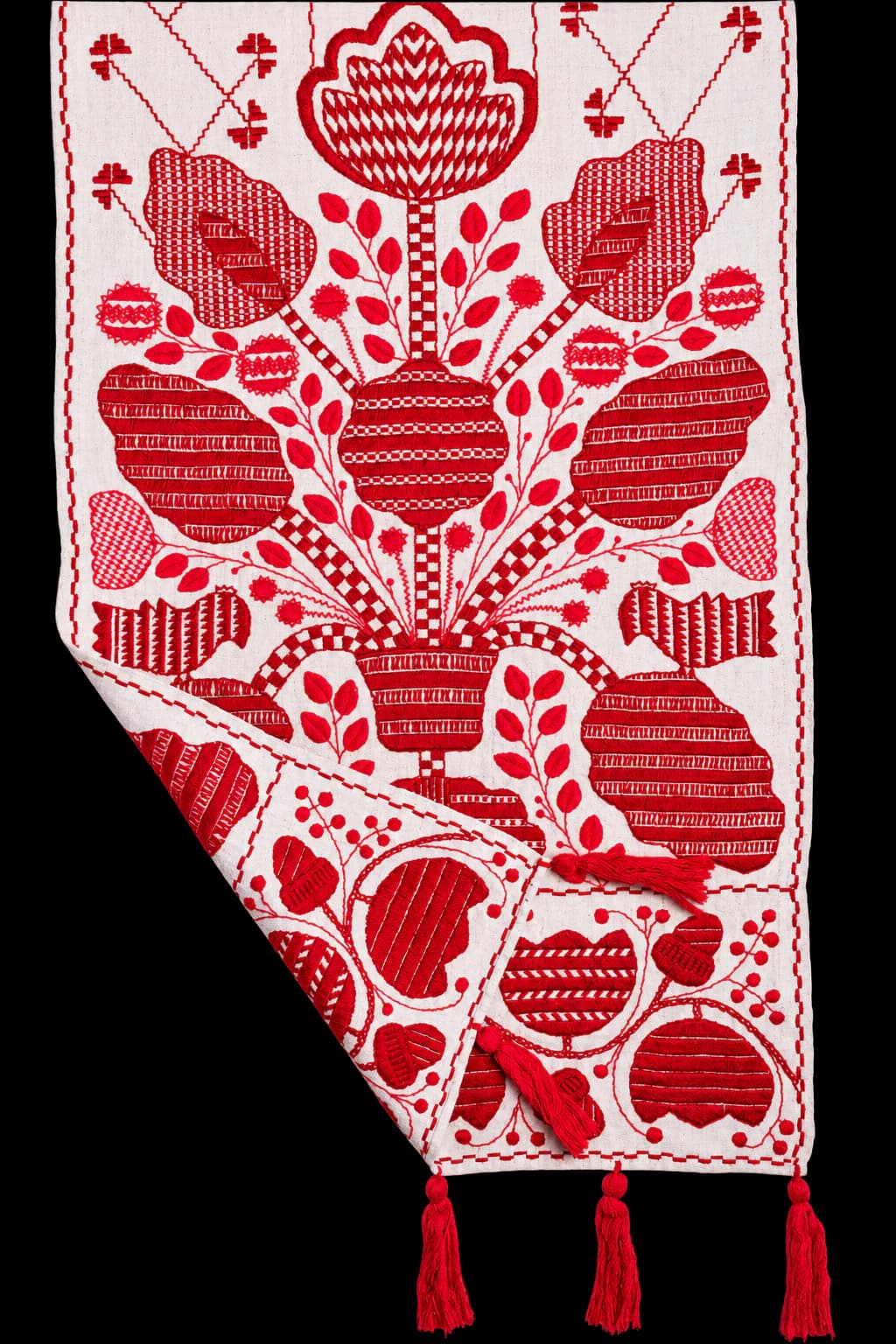
Tree of Life
The central motif — the Tree of the Family.
The Tree of Life is the heart of the Obukhiv towel’s ornament. It grows from the bottom up: from the roots of a family to its blossom. Every branch is a generation, and every generation adds its own stitch.
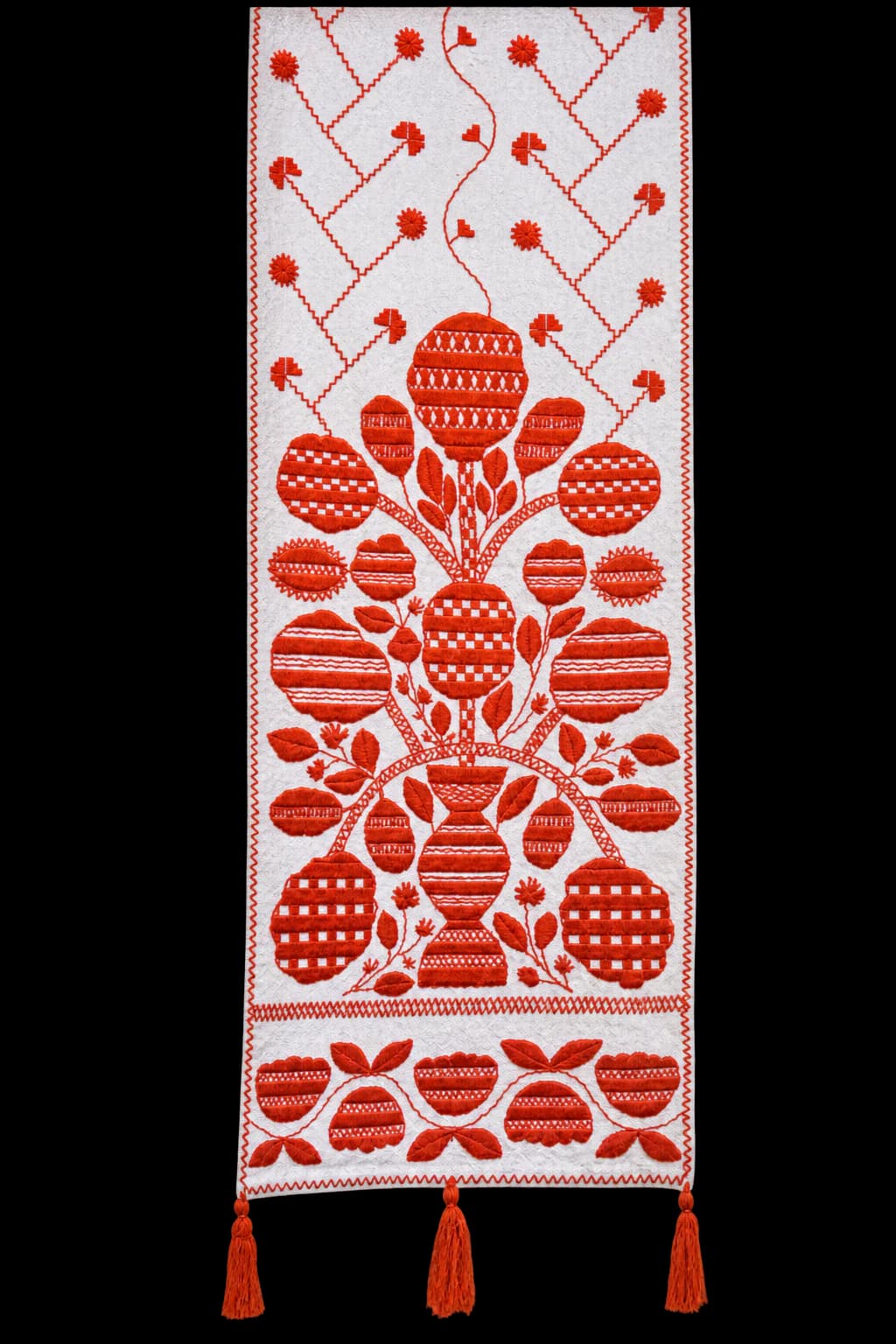
Flowerpot
The tree doesn’t float in the air — it is planted.
The Tree “grows” out of a vazon — a flowerpot.
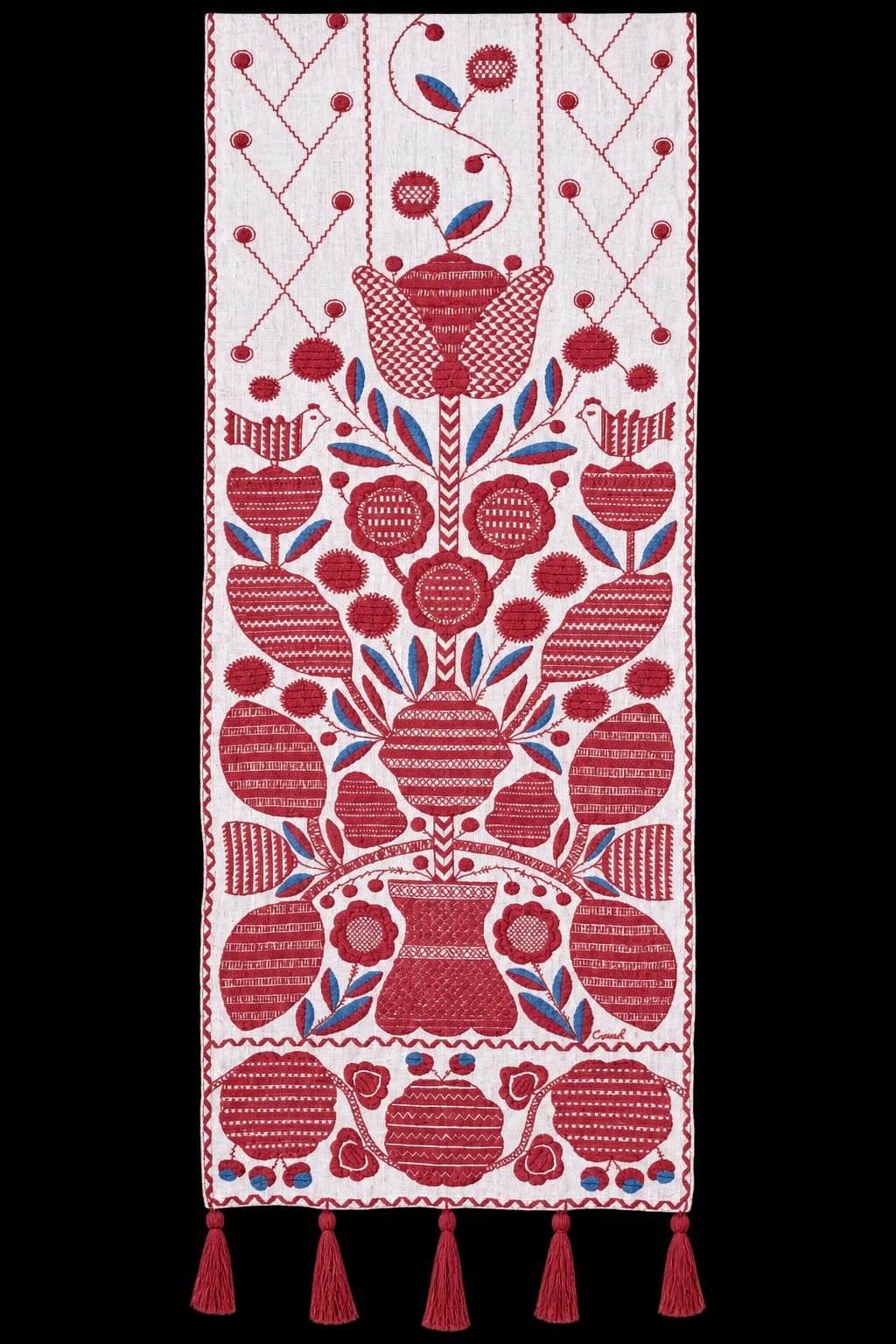
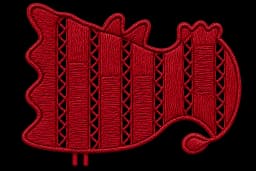
Birds
In pairs on either side of the trunk.
On some towels, birds sit on both sides of the tree — in pairs, mirrored, facing each other.
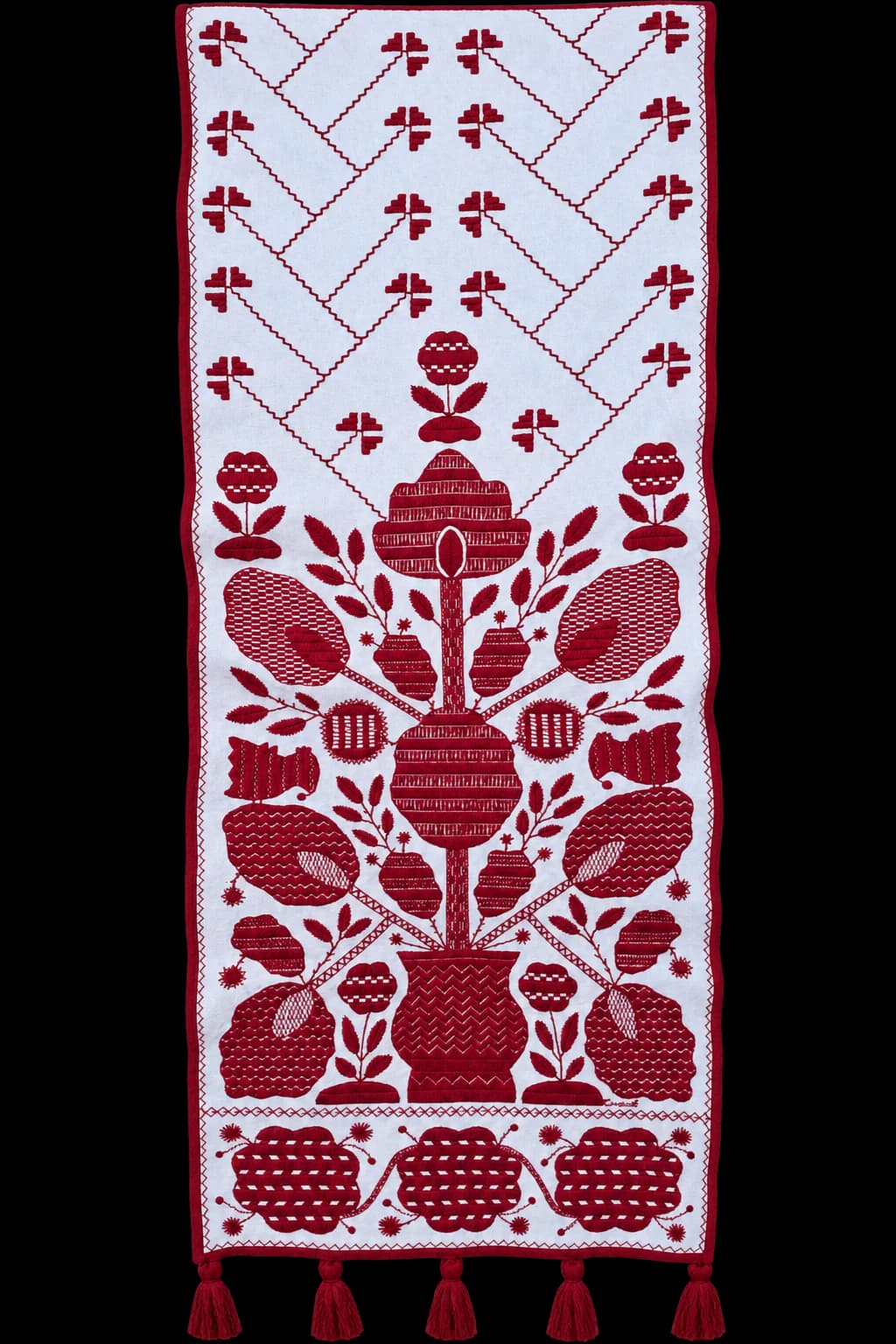
Endless line
A line that has no end.
Around its edge the towel is framed by the bezkonechnyk — a zigzag line with no beginning and no end. It holds the composition the way a bank holds a river, and promises that the story never breaks off.
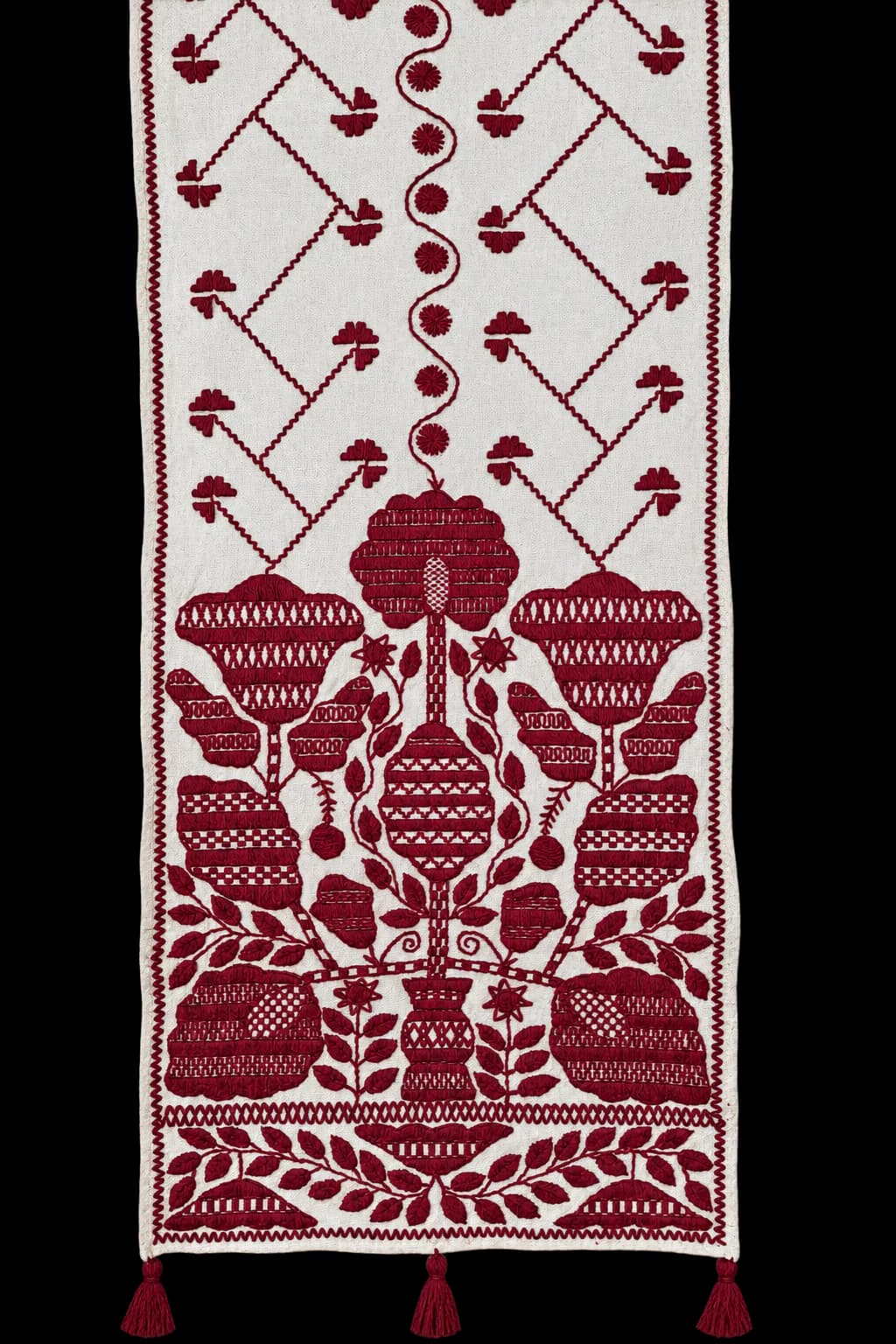
Flower-leaves
One motif — two natures.
The large side elements of the Tree are neither clearly a flower nor a leaf: one motif combines stylised features of both. That is why they are called flower-leaves.
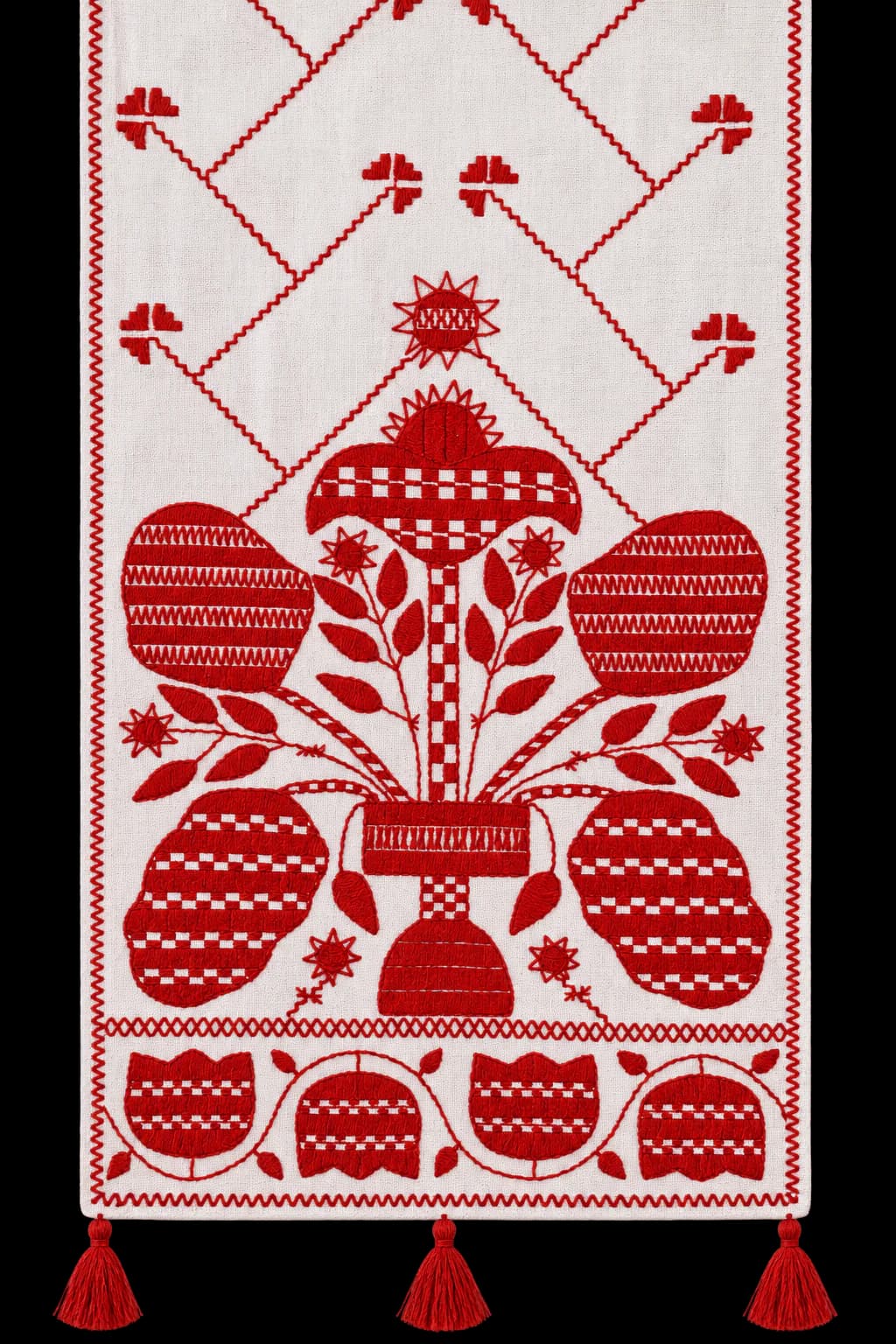
King-flower
A large king-flower crowns the Tree of Life.
It may take the form of a lily or a petalled flower, and it can also be round or oval.
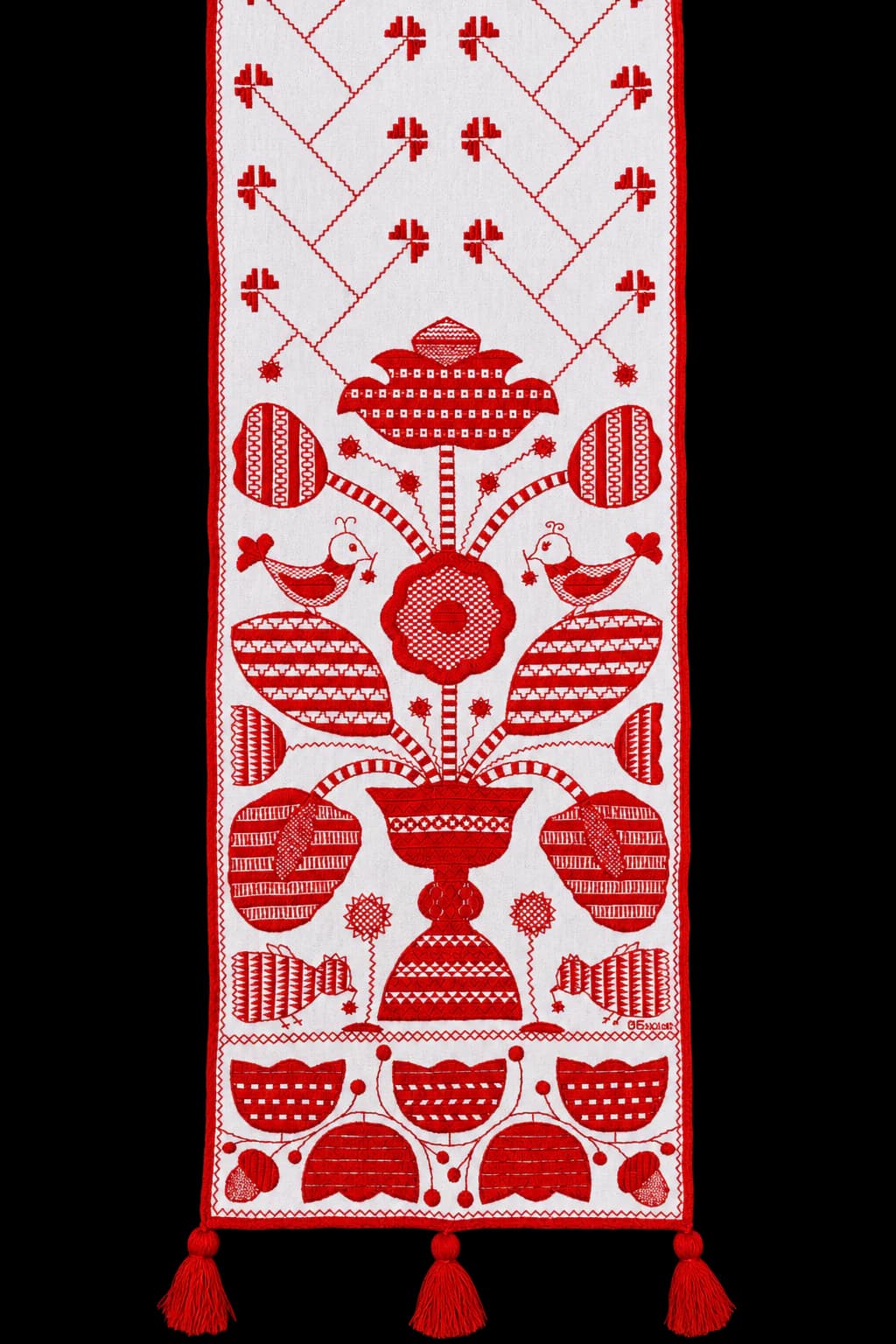
Broken branches
Broken branches link the compositions at opposite ends of the towel.
Sometimes the broken branches are combined with large endless lines.
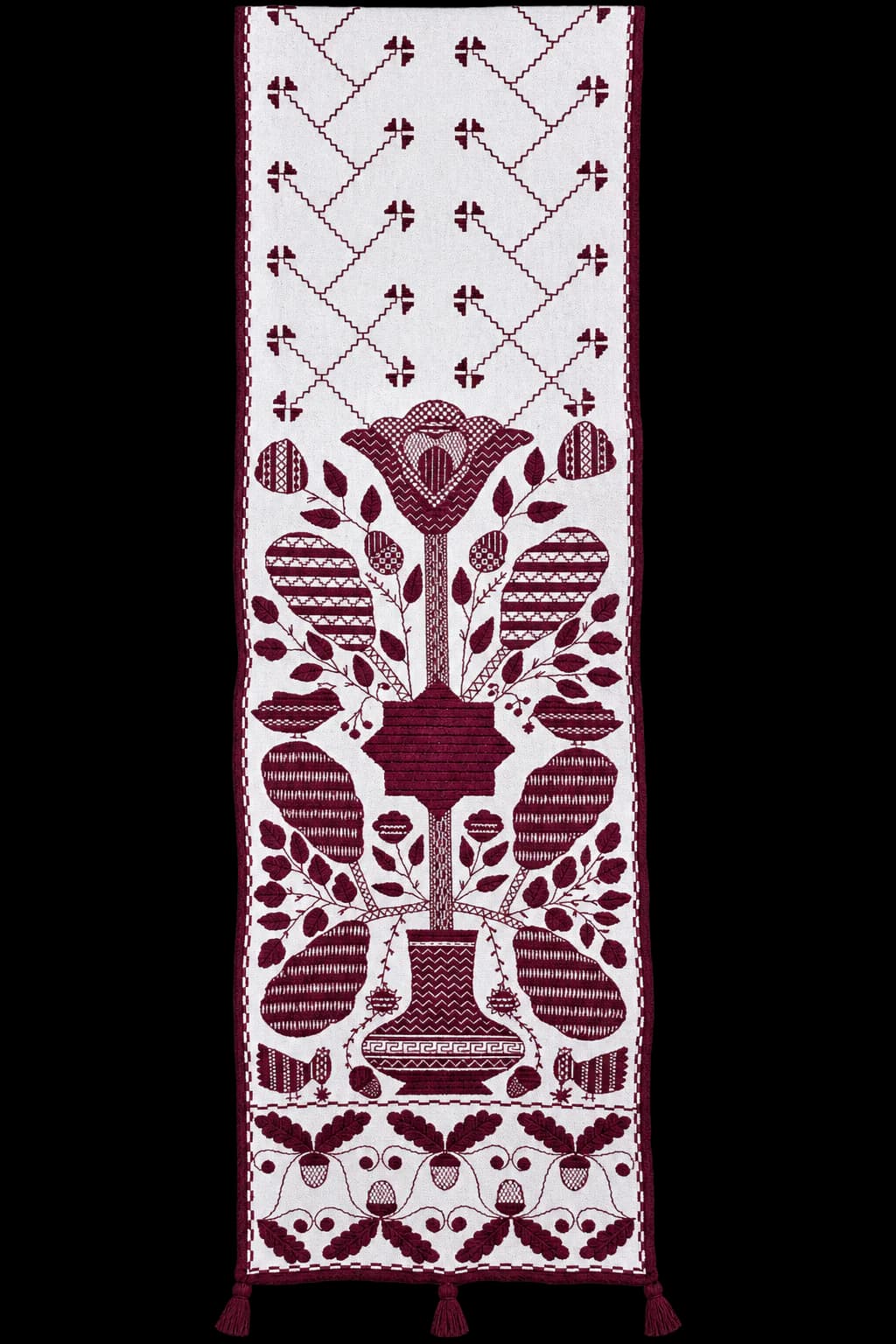
Double-sided embroidery
The Obukhiv towel has no wrong side.
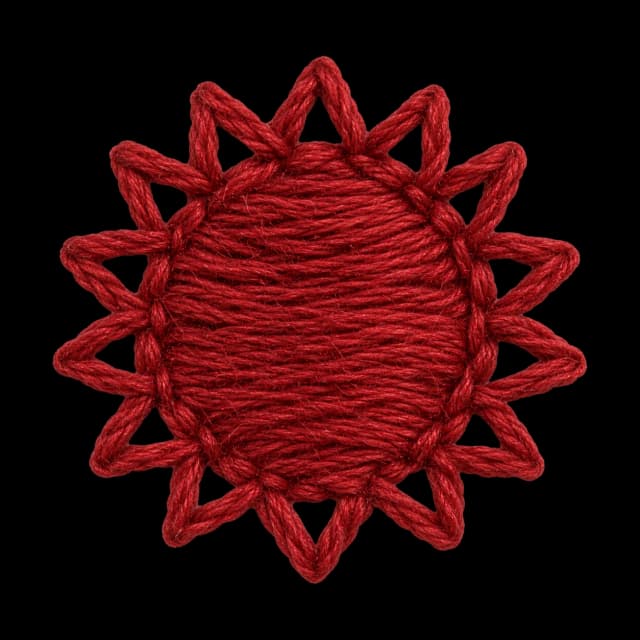
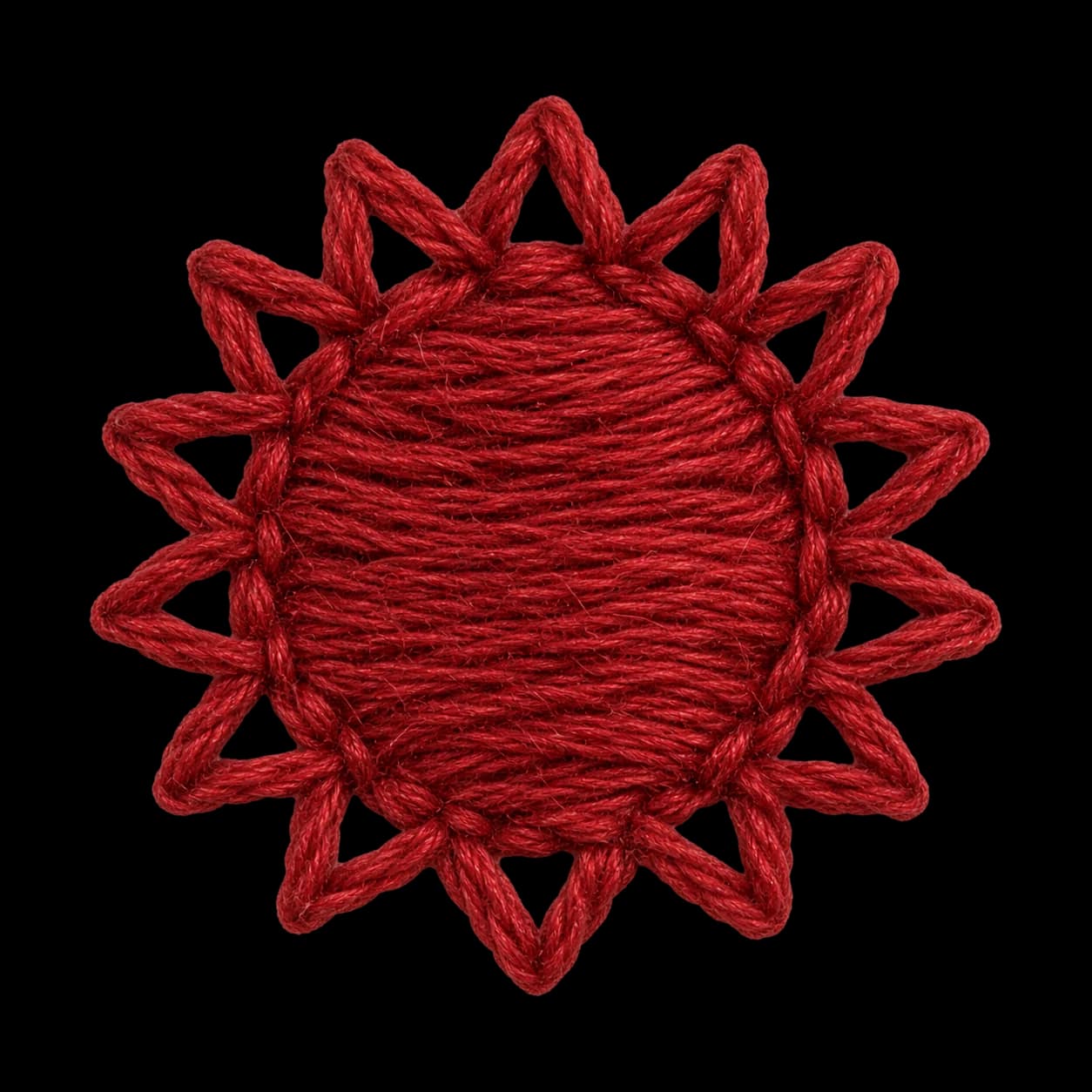
Obukhiv towels are embroidered with double-sided towel stitches. The ornament reads clearly on both sides of the linen, so there is no front and back.
Life beside the towel
The cloth of life’s most important days

Svashky girded with towels
An old photograph captured a moment of the wedding rite: the svashky — the bride’s attendants — girded with Obukhiv towels.
The place of honour — the pokut
In the house the towel was usually hung in the pokut — the honoured corner beside the icons, where the family gathered.
Embroidered by women and men
Records of male embroiderers have survived too: the art of guiding the thread was never limited to one gender.
14 December 2023
The Obukhiv “stitched” towel tradition is on Ukraine’s National List of Intangible Cultural Heritage
A living tradition recognised at the national level
Game · 15 questions
Test your thread of knowledge
Fifteen questions on history, symbols, craft and traditions. Play at your own pace: hints don’t lower your score, and mistakes can be practised separately.